
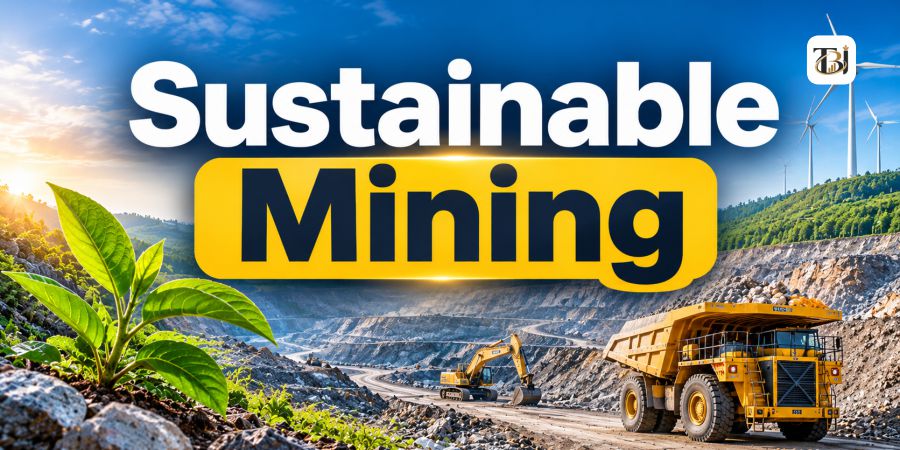
Sustainable Mining and the Future of Resource Development, Environmental Protection, and Industrial Innovation
The minerals that power modern civilisation are often hidden beneath the earth, yet their influence can be seen in almost every aspect of daily life. From the buildings that shape urban landscapes to the technologies that connect people, transport systems that move economies, and renewable energy infrastructure that supports the global transition, natural resources remain fundamental to industrial progress. As demand for these materials continues to evolve, the mining industry faces an important responsibility: finding ways to extract essential resources while protecting the environmental and social systems surrounding them.
This changing expectation is bringing sustainable mining into sharper focus. Rather than viewing environmental responsibility as a separate consideration, the industry is increasingly recognising it as an essential part of operational planning, investment decisions, and long-term business development. The objective is not simply to extract more efficiently but to create a resource sector that delivers economic value without placing unnecessary pressure on future generations.
Balancing Resource Demand with Environmental Responsibility
The growing demand for copper, lithium, nickel, cobalt, and other essential minerals is creating new opportunities for mining companies. These resources play a significant role in electric mobility, renewable energy systems, battery manufacturing, digital infrastructure, and advanced industrial applications. However, increasing production also brings challenges involving land disturbance, water consumption, energy use, waste management, and biodiversity protection.
Sustainable mining offers a framework for addressing these competing priorities through responsible extraction practices and better resource management. Companies must evaluate the environmental impact of their operations from the exploration stage through extraction, processing, transportation, and eventual mine closure.
This approach requires more comprehensive planning, stronger environmental monitoring, and greater accountability across the entire mining lifecycle. By integrating these considerations into everyday operations, mining organisations can improve productivity while reducing their environmental footprint.
Technology as a Catalyst for Industrial Transformation
Technological innovation is changing how mining operations are designed and managed. Automation, artificial intelligence, advanced geological modelling, remote monitoring, and data-driven decision-making are helping companies improve operational accuracy and reduce unnecessary resource consumption.
Autonomous equipment can support safer working environments while improving operational consistency. Digital monitoring systems allow operators to identify equipment inefficiencies, track energy consumption, and detect potential environmental risks before they develop into larger problems. Advanced exploration technologies can also help identify mineral deposits with greater precision, potentially reducing unnecessary excavation.
Water management is another area benefiting from innovation. Recycling systems, improved filtration technologies, and more efficient processing methods can reduce the pressure on local water resources. These developments demonstrate how sustainable mining can become an important driver of technological advancement rather than simply a response to environmental regulations.
Rethinking Energy Consumption and Carbon Emissions
Mining remains an energy-intensive industry, particularly during excavation, crushing, transportation, and mineral processing. Diesel-powered machinery and energy-intensive facilities contribute to operational emissions, making energy efficiency an important consideration for companies seeking to modernise their operations.
The adoption of renewable electricity, electrified equipment, battery-powered machinery, and alternative transportation systems is creating new possibilities for reducing dependence on conventional energy sources. Solar and wind installations can support mining facilities in suitable locations, while improved energy management systems can help operators identify opportunities to reduce consumption.
The transition requires substantial investment, infrastructure development, and careful operational planning. Nevertheless, companies that incorporate cleaner energy solutions into their long-term strategies can strengthen operational resilience and prepare for changing market expectations.
Strengthening Communities Through Responsible Development
Mining operations rarely exist in isolation. They influence the economic, social, and environmental conditions of the communities surrounding them. Employment opportunities, infrastructure investment, education, and local business development can generate significant benefits, but these outcomes must be balanced against concerns involving land access, pollution, public health, and the responsible use of natural resources.
Sustainable mining places greater emphasis on meaningful engagement with local communities, transparent communication, and respect for the interests of people living near mining sites. Companies must recognise that responsible development involves more than financial contributions or employment generation. It requires building relationships based on trust, listening to community concerns, and establishing clear mechanisms for accountability.
Investing in workforce development, supporting local suppliers, and creating opportunities for long-term economic participation can help mining operations contribute to stronger regional economies. Equally important is ensuring that communities remain part of discussions concerning environmental protection and post-mining land use.
Building a Circular Approach to Mineral Resources
The traditional mining model has largely focused on extracting raw materials and moving them through industrial supply chains. However, growing resource requirements and increasing environmental considerations are encouraging companies to explore more circular approaches.
Mineral recovery from mining waste, improved processing efficiency, recycling of metals, and the reprocessing of existing tailings can create additional value from materials that might otherwise remain unused. These approaches can also help reduce the need for new extraction in certain circumstances.
The development of circular resource systems does not eliminate the need for primary mining, particularly as demand for critical minerals increases. Instead, it creates opportunities to complement conventional extraction with improved recovery, recycling, and material efficiency.
For sustainable mining, this represents an important shift towards treating resources as valuable assets throughout their entire lifecycle rather than focusing exclusively on the initial extraction process.
The Importance of Governance and Long-Term Accountability
Environmental performance and social responsibility require strong governance structures. Mining companies must establish measurable targets, maintain transparent reporting practices, and regularly assess the effectiveness of their environmental and operational policies.
Responsible tailings management, mine rehabilitation, biodiversity conservation, occupational safety, and water stewardship must remain central to corporate decision-making. These responsibilities should extend beyond regulatory compliance and become part of an organisation’s long-term business strategy.
Investors, governments, customers, and local communities increasingly expect companies to demonstrate how their operations contribute to responsible economic development. Strong governance can therefore support investor confidence, reduce operational risks, and strengthen relationships across the mining value chain.
Importantly, responsible mine closure must receive attention from the beginning of a project’s development. Rehabilitation planning, financial provisions, and long-term environmental monitoring can help ensure that mining sites are managed responsibly even after extraction activities conclude.
Shaping the Next Generation of Mining
The future of the mining industry will depend on its ability to meet growing material requirements while responding to environmental limitations, technological change, and rising social expectations. Companies that embrace innovation, invest in cleaner operations, and prioritise responsible resource management will be better positioned to navigate this transformation.
Sustainable mining is ultimately about redefining what industrial progress should look like. It recognises that natural resources are essential to economic development, but their extraction must be supported by responsible practices, long-term planning, and respect for the communities and ecosystems connected to them.
As industries move towards electrification, digitalisation, and cleaner energy systems, the importance of responsibly sourced minerals will continue to grow. The mining sector has an opportunity to become an active contributor to this transition by demonstrating that productivity, profitability, and environmental responsibility can advance together.
The real measure of progress will not be determined solely by the volume of minerals extracted or the scale of industrial expansion. It will be reflected in how effectively the industry protects natural resources, creates lasting economic opportunities, and leaves a more resilient foundation for generations to come.