What Can Sustainable Economic Development Accomplish to Improve the Performance of Enterprises, Livelihoods, and Economic Development
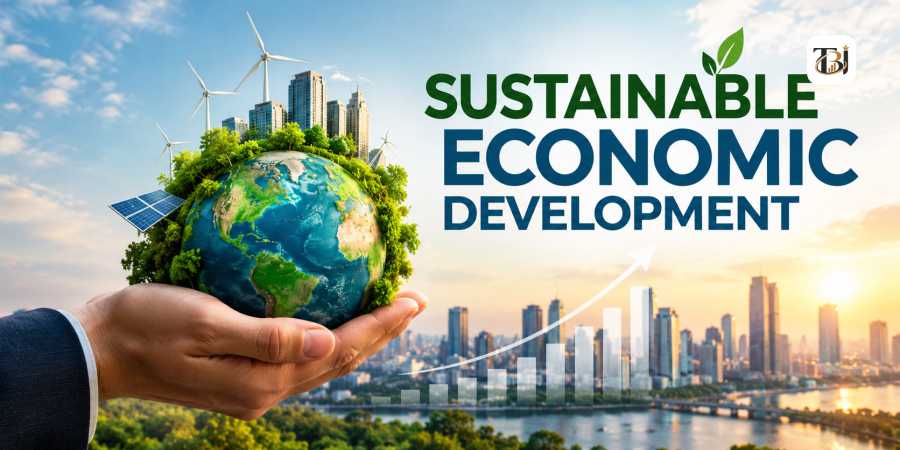
Economic development would be significant to people if they could earn their livelihood, enterprises develop without exhausting their resources, and communities can plan ahead for the requirements of their coming generation. Growth in the number of businesses may be beneficial for improving the economic state of the locality, however, sustainable economic development cannot ever be accomplished through production and investments only. The question is, is there any possibility for the people to grow economically and does communities have the capacity to adjust to changing environment?
The theory of Sustainable Economic Development enables one to comprehend such questions. It is not an approach that concerns about three separate concepts, but is a combination of three concepts into one decision making process.
Making Local Businesses Engines of Opportunity
Small businesses will be able to meet demands from customers since they have an understanding of the demands of the locality and hence can generate employment in their communities. These businesses can develop the economic basis of their communities when provided with the necessary financing, infrastructure, and business guidance.
But the entrepreneurs will lack financial resources, modern equipment, skilled labor, and the capacity to undertake complex administrative activities. But governments and financial institutions can solve this problem through transparent loans schemes, capacity building, simplified registration process, and commercial networking.
Entrepreneurship development is another way of stimulating local economic development. Business organizations will purchase materials, employ people, and create demand for other services within the community. This is how the community will be able to diversify their economy without being dependent on one employer or industry.
For Sustainable Economic Development to be effective, any aid to business should revolve around sustained commercial ability. Short-term aid can help a firm start up, but long-term success depends on its ability to provide service to clients, control costs, innovate, and sustain itself financially.
Treating Natural Resources as Economic Assets
Land, water, forests and other natural resources are important for agriculture, industry, tourism, and other aspects of daily human activity. The importance of these resources lies not only in the income that they generate. Communities risk future production and increasing costs of operation when they harm the resources on which they rely.
Businesses can react to this problem by analyzing their consumption of materials, water and energy. A manufacturer can optimize its production process and reduce waste. A hotel can be optimized in terms of water consumption and energy-efficient equipment. Agricultural company can spend money on protection of soils and irrigation.
None of these optimizations needs expensive reformation. Consumption analysis, loss reduction, equipment maintenance, and changes in purchasing habits can show where improvements lie. In the long term, more efficient usage of resources may lower the costs for companies and help them deal with supply disruptions.
Resource preservation will also require smart public planning. Local government needs to take into account the consequences of development for future generations and environment around the business projects. Economic projects should be analyzed in connection with the burden they put on the environment rather than separately.
This is not about stopping development; rather, it is about ensuring that commerce builds up the foundations for ongoing development.
Connecting Skills With Real Economic Demand
A diversified economy will be impossible for a community whose people lack the skills needed by the rising industries. Employers will find it difficult to find qualified technicians and at the same time, jobseekers will have no access to the opportunities they need. Such a situation can hinder investments and prevent communities from benefiting from economic change.
Education and workforce programs can reduce this divide if they are designed based on the needs of the community. In this regard, employers can assist training institutions to know what skills are necessary for certain jobs while institutions such as colleges and vocational centers can offer hands-on experience in addition to theoretical training. Internships and further education can allow people to change their occupation without forgetting the value of their experience.
It is important to remember that workers need different things depending on their conditions. New workers entering the labor force, old workers adjusting to new technology, and returning workers all have different needs.
In Sustainable Economic Development, economic development can become more sustainable if people can take part in the process. Through relevant training, good recruitment practices, and advancement opportunities, investment can lead to greater household stability.
Designing Infrastructure Around Everyday Needs
Infrastructure affects how people travel to work, move goods, receive government services, and conduct business. Industrial zones without reliable transportation systems have little chance of attracting companies. Communities lacking electricity will experience trouble maintaining electronic services and modern production processes. Poor planning can make it more difficult for people to get around as well as put a strain on public institutions.
Proper infrastructure requires knowledge of how people and companies use the environment. Local authorities have to take into account population, economic activity, projected demands, maintenance expenses, and underdeveloped regions before deciding to invest public money.
It is not only the size of the infrastructure that is important but its quality as well. Sometimes it pays off more to develop a small piece of infrastructure solving specific problems than large infrastructure with little application. Maintenance requires the same amount of consideration since roads, water supply systems, public institutions, and utilities depreciate with time unless there are institutions that are capable of preserving them.
Coordination of plans can be helpful. It makes sense for housing, employment opportunities, transportation system, and government services to complement each other rather than develop as separate projects.
Measuring Progress Beyond Financial Growth
Financial indicators continue to be important, although not all aspects of a community’s economic state can be explained by financial factors. Increases in company income may be associated with insecure jobs, expensive housing, or declining quality of public goods. This means that decision-makers must have an understanding of whether the economic development really contributes to the well-being of the population and the functioning of the economy.
Useful indicators might be the quality of employment and job security, survival of newly founded companies, availability of necessary services, workforce participation, resource use and allocation of economic opportunities. Local governments will need to select indicators relevant for their case and obtain enough data to see the difference. The need for accountability is connected with the fact that good intentions cannot substitute for effectiveness. Any program should have clear goals, a realistic budget, adequate control and assessment mechanisms. In the case of proving that the project does not achieve its goal, it is important to have an ability to change it without wasting resources just because of already made decisions.
Sustainable Economic Development requires the correlation of policy commitments and results.
Conclusion: Prosperity Requires Deliberate Choices
Sustainable economic development usually doesn’t come out of a single achievement. It grows out of the choices in relation to business activities, education, infrastructures, natural resources, and institutions that connect all of these elements. Every choice provides an opportunity but its potential depends on how well it will fit with other choices.
Sustainable Economic Development requires from the leaders the consideration of the immediate return of investment and conditions created by such investment. The successful development project should be profitable and shouldn’t impose excessive demands on workers, community, government budget, and natural environment.
The most productive economies will be those who are able to make conclusions from the results, adapt to the changes, and provide individuals with opportunities for their active participation. The combination of commercial ambitions and responsible planning as well as tangible public benefits should ensure the sustainable prosperity of societies.