How Brian Chesky Connects Design, Human Behaviour, and Commercial Innovation to Build a Distinctive Business
An enterprise may provide convenience, competitive pricing, and even highly advanced technology and yet find it hard to gain the trust of individuals. The difficulty is even harder if customers have to make decisions related to strangers, unknown locations, and situations which are hard to appraise before taking any steps. To solve the difficulty, one needs more than a highly advanced technological platform. One has to know the factors that make individuals comfortable enough to take any actions.
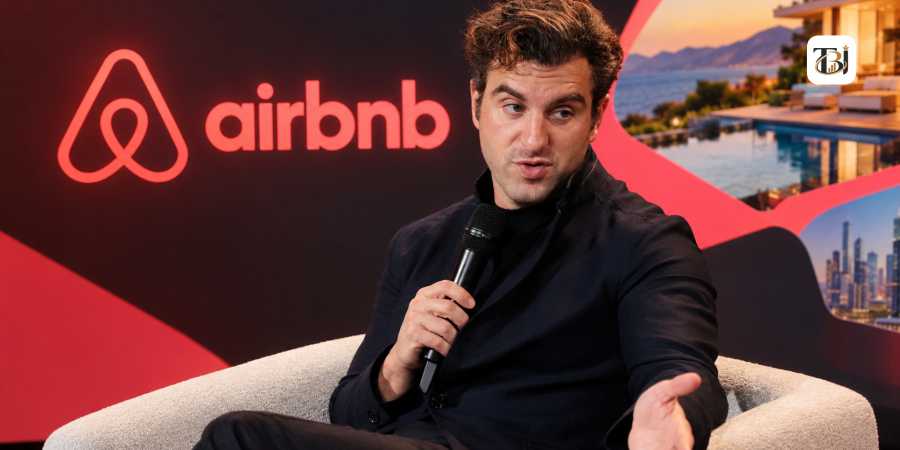
The issue that has been discussed above is very important for Brian Chesky since it touches upon issues related to product development, customer psychology, and entrepreneurship. As a co-founder and CEO of Airbnb, Brian Chesky has managed to develop a business that is based on a transaction that requires an extremely rare commodity – trust of strangers. His experience as an entrepreneur is interesting from this point of view.
Seeing the Business Through the Customer’s Eyes
Most entrepreneurs look at an industry and seek to find a better way to serve its current consumers. However, the other way around is to start with the individual experience and look for those factors that prevent people from reaching their goals. The change in approach may help discover new market opportunities that a regular analysis fails to do.
Brian Chesky started his entrepreneurial career as a designer of industrial products, having studied the interaction of people with objects and the environment. This approach provides an interesting angle on the evolution of the Airbnb business. An accommodation is more than finding a free room to stay in; it is also about privacy, cleanliness, the convenience of the location, communication with the host, safety, and meeting one’s expectations.
All of these aspects provide a good opportunity for a company to build trust or doubts. Resolving the mentioned issues requires an understanding of all stages of customer’s journey, from the first encounter with the offer to solving an issue after making a reservation.
This idea has a much wider application in the business world. It is possible to improve one’s product through the study of customer’s moments of doubt and hesitation.
Turning an Informal Idea Into a Repeatable System
An idea cannot be made into a sustainable business venture purely on the basis of excitement alone. Expansion needs a business to evolve from an idea into a system that works efficiently under different conditions for customers with different expectations, budgets, and situations.
In the case of Brian Chesky’s efforts at growing Airbnb, the need for him was that of developing a system that would allow a diverse array of properties and their owners into the picture while also providing travelers with sufficient information to make decisions.
This type of development calls for achieving a fine line between structure and flexibility. Lack of structure makes customers unsure of what they can anticipate from the service. However, too much of it will make them lose the very uniqueness of the service they want.
It is possible to create a system where clear expectations and unique offerings work together.
This concept offers practical benefit to growing organizations. Organizational leaders have to decide what needs standardized, what needs to be local, and what requires a reliable solution. Expansion will be easier to manage when the underlying system accommodates diversity while maintaining reliability.
Leadership Requires More Than a Compelling Vision
Although it can inspire people working for the organization, investors, and consumers, the ideas of a company may be put into practice only by its day-to-day decisions. Leaders have to turn the general vision into concrete plans concerning products, recruitment, customer service, and responsibility.
Brian Chesky kept a direct connection with Airbnb’s product and company direction while developing the organization. In other words, one has to face the issue of how the CEO can be interested in the quality of the business and at the same time not hinder talented people from decision-making.
The solution hinges on clarity. Employees should know what the organization stands for, why some standards are necessary, and how their efforts contribute to the overall customer experience. In absence of such clarity, conflicting priorities can be pursued by different teams despite everyone’s best efforts.
Leadership involvement is most valuable when it enhances judgment as opposed to adding another layer of approvals to the process. A leader who knows the ins and outs can see inconsistencies, debunk flawed assumptions, and ensure that teams are aware of any potential issues before they become serious problems. The objective is to bolster the organization’s capacity for good decision making.
Growth Brings Responsibilities Alongside Opportunity
A system that works on multiple platforms cannot be considered a success only based on customer acquisitions and transaction amounts. The existence of this system can have consequences for local business owners, local neighbourhoods, housing markets, public amenities, and the people offering the service.
Since the company has grown, issues around short-term rentals and housing prices became one of the aspects of the discussion of the company’s model. This problem shows the basic issue of firms that work in people’s homes and communities: commercial success alone does not resolve the issues of public interest.
Therefore, Brian Chesky is facing a leadership challenge that is larger than expanding the business. The firm should continue to think about how its commercial needs can overlap with those of the hosts, guests, residents, authorities, and destination areas attracting tourists.
There are no universal answers to these competing interests. Conditions of the housing market, tourist flows, and regulatory environment vary from place to place. Responsibility calls for taking into consideration local data and being ready to adapt business strategy when needed.
For others who are in business, the moral of the story is clear. The firm needs to consider the impacts of its growth before it becomes too late to have an effect on those impacts.
The Next Stage of Innovation Must Earn Its Place
Technology provides companies with new methods for personalization, reducing bureaucracy, and guiding customers through difficult choices. Still, adding a new feature is not a guarantee of an improved experience. What counts is innovation that tackles a real problem without causing any extra confusion and compromising trust.
Brian Chesky is at the head of a company with possibilities for combining accommodation, travel services, and technology in a more integrated customer experience. The main task here is to provide these additions but not lose sight of the service that was initially sought by the customers.
For that, careful experimentation is needed. First, companies must define what problem the new feature would solve and check if the customers gain from it. Finally, companies have to understand if the improvement is worth all the costs incurred by it.
Same is the case for artificial intelligence and automation technology. While these technologies may help provide better service responses, accuracy, privacy, accountability, and human contact in case of complicated issues are aspects that companies need to look into.
Building a Business Around Lasting Confidence
Brian Chesky embodies the type of entrepreneurial thinking where creativity meets the challenges of managing a massive business entity. His efforts illustrate the importance of considering not just the products and services that a company offers but also the concerns and uncertainties of potential consumers prior to purchasing.
The said viewpoint holds significance for executives in any field. A financial firm needs to explain its decision-making process in easy-to-understand terms. A health care business needs to enable its customers to feel knowledgeable and respected. A store needs to ensure that information about its products is trustworthy. In all these cases, the level of consumer experience determines the willingness of people to come back.
Sustainability in the long run is not merely about making consumers take notice of a company. It also involves earning their trust through reliable performance, communication, design and decision-making.
The true importance of Brian Chesky’s entrepreneurial story is in the business lesson that can be learned from it on a much broader level – innovation is all about realizing a genuine human need and following through with tackling it. The idea itself can be an entrance, but it is the strength of the system that keeps people around.