NATO Expansion and the Changing Balance of Power in an Increasingly Complex World
There have been drastic changes witnessed within the sphere of global security as the world continues to witness changes in terms of defense priorities, international relations, and strategic interests of countries.
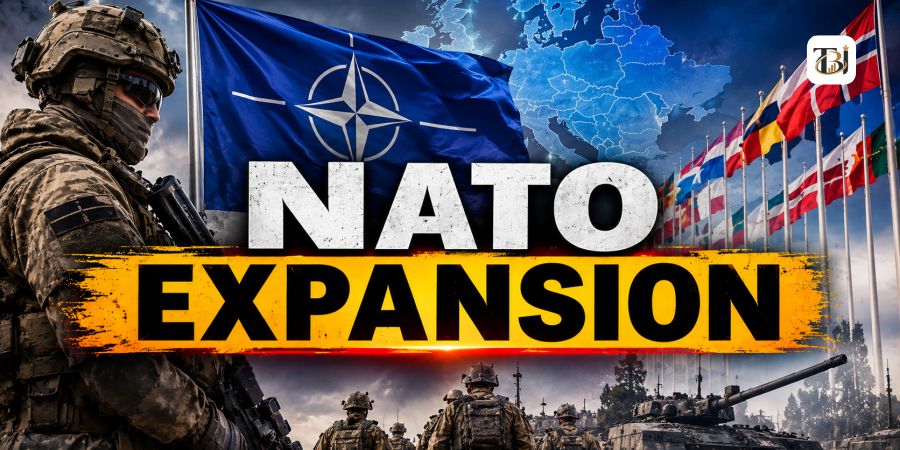
In light of such changes, NATO expansion has become a key development that has had impact on diplomatic relations, military relations, and the balance of power in different regions.
With the growing uncertainty within the geopolitics of international relations, there is need for a review of the concept of collective security.
The Evolution of NATO and Collective Defence
North Atlantic Treaty Organization (NATO) is an organization that was set up to facilitate collective defence as well as promote cooperation between its member states.
Throughout the years, NATO has moved beyond the initial formation and has gained new members as well as shifting priorities depending on the prevailing circumstances internationally.
NATO expansion demonstrates how NATO has evolved over time in order to facilitate increased interests of countries in defence alliances as well as international security architecture.
Strategic Advantages of Membership
For countries thinking about membership, participation in the alliance goes beyond mere military commitment. This is an opportunity to enhance their defence institutions, their military readiness, gain better access to security cooperation, and forge diplomatic ties with already well-established international allies.
Membership may also help to build up military infrastructure, intelligence sharing, cyber security, and crisis management capacity. This shows how NATO enlargement has impacts on national defence policies as well as broader institutional development.
Geopolitical Tensions and Regional Implications
However, changes in the composition of the alliance bring about numerous geopolitical factors as well. Although some countries see the alliance with NATO as an indispensable security measure against any external threat, other countries consider the growing involvement of NATO in the region as an impediment to established security arrangements.
Differences in perceptions of the situation could lead to the exacerbation of diplomatic tensions and rivalry between major countries.
Therefore, the issue of NATO expansion continues to be of great international interest.
Technology, Innovation, and Modern Defence
Moreover, there is the issue of the economic and technological effects of closer collaboration in defense affairs. The contemporary threats faced by states are much broader than traditional military ones.
The issues related to cyberattacks, artificial intelligence, information manipulation, energy security, and other new military technologies are becoming ever more pressing. Solving them presupposes substantial investment, research, innovations, and international cooperation.
The expansion of NATO offers additional possibilities for technology collaboration on the part of member countries.
The Responsibilities Behind Alliance Membership
However, belonging to the organization carries a set of considerable responsibilities. The states that join the alliance will have to ensure consistency between their defense strategies and the commitments, cooperate in realizing common security goals, and possess proper military capacities.
This process may prove to be quite expensive and complicated for many governments, especially those dealing with other issues at home.
The integration process should thus imply proper planning and understanding of the commitments entailed by the organization’s membership.
Unity and Cooperation in an Expanding Alliance
In future, unity will continue to be key for this alliance to retain its credibility and effectiveness. Members will have different security concerns, economic interests and foreign policies.
Consensus can be achieved through constant discussion, open decision making and recognition of common goals. Future expansion will be dependent not only on the readiness of interested parties to join but also the ability of this alliance to accommodate new members without compromising its own objectives.
Defining the Future of International Security
In the end, the issue of NATO expansion is not just about geography or membership but goes deep into the issues of international collaboration, sovereignty, deterrence, and the role of powerful alliance organizations in ensuring peace.
As the international order develops, decision-makers will have to take into account the advantages and drawbacks of a more general system of collective security.
The future of global security will require countries to balance between being prepared and being diplomatic, between being strong and responsible, and between being self-interested and collaborative. The issue of NATO expansion will continue to be relevant in the discussion of security and geopolitics.