
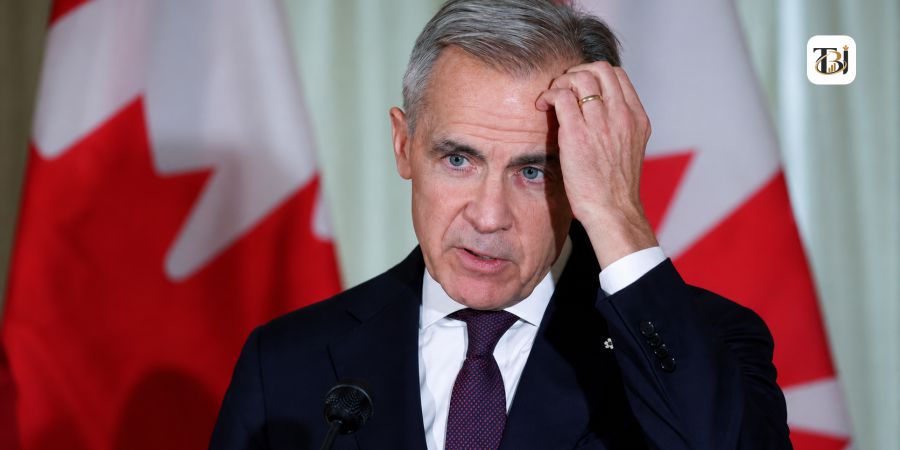
Mark Carney and the Changing Landscape of Global Economics, Governance, and National Growth
From Global Finance to National Leadership
Leadership in the modern fast-changing world cannot be based solely on political power; it also requires economic knowledge, strategy, and decision-making during the time of uncertainty. The former Governor of the Bank of Canada, Mark Carney, is a unique example of such leadership, as he has gained a lot of years of experience in international finance and economics.
Mark Carney was born in Fort Smith, Northwest Territories, and grew up in Edmonton, Alberta. Already as a child, he displayed his passion for economics. The education acquired by him at the Harvard University and Oxford University laid the base for his future career, which he spent working for the world’s leading financial institutions.
A Career Built on Economic Expertise
Among the defining moments in Mark Carney’s career was when he took office as the Governor of the Bank of Canada in 2008. Taking office during the financial crisis was one of the most defining moments for Carney because it meant that he would have to deal with an incredible economic situation.
Appointing him as the Governor of the Bank of England in 2013 helped him gain more international recognition. In his role, he had to deal with many economic events such as the Brexit uncertainty. His responsibilities were not limited to just monetary policies but also included instilling confidence in institutions and preparing the financial sector for future challenges.
This gave him an insight into how economic decisions impact business, employment, investments, and the citizenry.
Connecting Economic Growth with Sustainability
Apart from being involved in regular policymaking in the financial sector, Carney gained a lot of interest in sustainable finance and climate investing. Being the Special Envoy of the United Nations for Climate Action and Finance gave him enough room to express his view that financial institutions play a critical part in achieving long-term goals environmentally and economically.
More mobilization of private funds into sustainable development through consideration of environmental opportunities and risks by financial institutions in investment decision making was one of his recommendations.
Economic growth, according to Mark Carney, should not be seen separately from the environmental and structural issues that future generations face.
Redefining Canada’s Economic Priorities
Becoming the 24th Prime Minister of Canada in March 2025 signified his shift from being a financial leader to a national leader whose role includes formulating policies based on his economic background that can help enhance the country’s competitiveness and improve the lives of its citizens.
There are many economic considerations for the nation of Canada that include affordable housing, improving productivity, developing infrastructure, diversifying trade, and investing in the industries in Canada. Balancing between the immediate demands of the citizens and the interests of the nation is important in tackling these challenges.
In Mark Carney’s economic program, there is an emphasis on improving the domestic economy as well as creating new opportunities through international trade and investment. Improving economic resilience, innovation, and business growth are among other considerations in his program.
Building Resilience in an Uncertain World
The world’s economy is experiencing some changes in terms of transformation. The dynamics of trading partnerships, technology, geopolitics, and energy are changing how nations view economic security.
In Canada, all the above factors offer an opportunity for the country to consolidate itself as a competitive and resilient global economy through investment in important areas such as energy, critical infrastructure, manufacturing, and technologies.
The experience of Carney in international financial organizations brings knowledge about how economies are interconnected. It is the role of the nation to ensure these insights translate to policy actions.
Leadership Beyond Economic Numbers
While economic growth is undoubtedly a key indicator of a country’s development, it is not enough to reflect the full reality of the process. The availability of employment, affordable costs of living, available housing, business confidence, and public services are equally significant measures of development.
The effectiveness of Mark Carney’s leadership will depend on how successful he and his government will be at tying up their economic policies with these measures. Companies need certainty and favorable conditions for investments, while citizens expect increased stability and opportunities for themselves.
Gaining public trust will thus remain a critical factor of his political path forward.
Shaping the Next Chapter of Canada
While a move from financial leadership to political responsibility carries with it many possibilities, there also come great expectations. As Prime Minister, Mark Carney comes armed with rare expertise and experience in international finance and economics.
The goal would be for him to utilize such expertise and experience to craft a better, more flexible and economically independent country. The choices made within his term as Prime Minister would define the country’s place in international markets, its investment climate domestically and its ability to face future challenges.
Ultimately, the success of his leadership would be judged not only by the policies implemented and the economic goals set forth but rather the legacy that would be left behind for the people and industries of Canada.
With Canada entering into a new era of transformation politically and economically, Carney’s leadership provides a unique opportunity for setting the right priorities for the future.