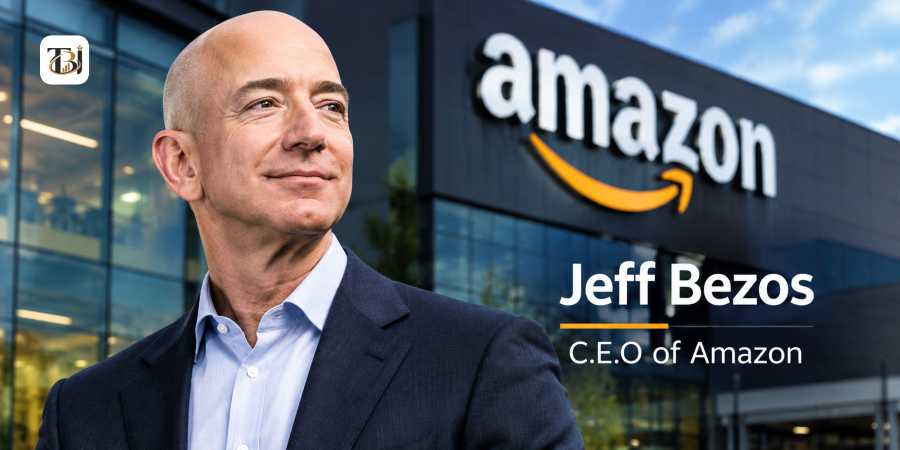
Some business investments produce returns within months. Others require years of spending, experimentation and difficult decisions before their value becomes clear. The challenge for entrepreneurs is knowing which opportunities deserve patience and which are consuming resources without creating meaningful progress. Jeff Bezos offers a compelling case study in this distinction. His approach to business investment at Amazon demonstrates how a company can prioritise customer needs, reinvest earnings and accept short-term financial pressure in pursuit of a larger commercial ambition.
When Amazon started as an online bookstore in 1994, the internet was still an uncertain environment for retailers. Bezos saw an opportunity to use technology to change how people discovered and purchased products. The company eventually expanded into a broad retail marketplace, cloud computing, digital entertainment and logistics. That evolution did not happen through one defining investment. It emerged from a series of decisions that connected immediate business operations with longer-term possibilities.
Entrepreneurs can learn from this strategy without assuming that every ambitious investment will succeed. The more useful lesson is how to evaluate opportunities, manage risk and maintain a clear purpose while the business grows.
Jeff Bezos and the Value of Thinking Beyond Quarterly Results
One of the most recognised aspects of Jeff Bezos‘s leadership philosophy is his preference for long-term business decisions over short-term financial appearances. In his early shareholder letters, he explained Amazon’s focus on long-term market leadership, customer value and investment in future capabilities. This approach helped establish a culture in which some spending decisions were evaluated according to their potential over several years rather than their immediate contribution to profit.
For entrepreneurs, the principle is relevant because early-stage companies often face pressure to demonstrate quick returns. That pressure can encourage leaders to cut research budgets, avoid difficult product improvements or pursue revenue that does little to strengthen the business. A longer planning horizon creates room to invest in capabilities that customers may value increasingly over time.
However, long-term thinking should not become an excuse for weak financial discipline. Businesses still need cash flow, realistic milestones and evidence that investments are working. The objective is to avoid sacrificing durable value merely to improve a short-term metric, not to ignore financial performance altogether.
Reinvestment as a Driver of Sustainable Growth
A growing company faces a recurring choice: should it distribute profits, preserve cash or invest in the next stage of development? Jeff Bezos repeatedly favoured reinvestment at Amazon, directing resources towards technology, fulfilment infrastructure, product selection and customer experience. The strategy required substantial spending before some of its benefits became visible in the company’s financial results.
Amazon Web Services (AWS) is a particularly useful example. Launched in 2006, AWS developed into a major cloud computing business by providing companies with computing power, storage and other technology services without requiring them to build every part of their own infrastructure. What began as a new business opportunity eventually became one of Amazon’s most important sources of operating income. Amazon’s 2024 annual report recorded approximately $107.6 billion in AWS net sales, illustrating the scale that a business unit can achieve when a company invests in a market over time.
The lesson for entrepreneurs is not to imitate Amazon’s spending. It is to identify investments that can create capabilities the business will need in the future. A smaller company might invest in better software, staff training, customer support or a more reliable distribution network. The amount may be modest, but the underlying question is similar: will this investment improve the company’s ability to serve customers and compete over the long term?
Customer Experience as an Investment Strategy
Many businesses treat customer service as an operating expense to be controlled. Jeff Bezos approached customer experience as a source of competitive advantage, connecting convenience, selection, pricing and delivery reliability with customer loyalty.
Amazon Prime illustrates this thinking. Introduced in 2005, the membership programme combined shipping benefits with a recurring customer relationship. Over time, it expanded to include entertainment and other services. The broader proposition gave customers additional reasons to remain within Amazon’s ecosystem, while membership revenue and repeat purchasing supported the company’s commercial model.
Smaller businesses can apply the same principle without copying a subscription programme. A retailer might improve delivery estimates, a software company could simplify onboarding, or a service provider might make it easier for customers to resolve problems. Each improvement requires investment, but it may also reduce customer frustration and encourage repeat business.
Entrepreneurs should still measure the results. Customer satisfaction, repeat-purchase rates, retention and the cost of serving each customer can reveal whether an initiative is producing value. A feature that customers praise but rarely use may not justify its cost. Long-term thinking works best when it is paired with clear evidence.
Experimentation, Failure and Calculated Risk
Not every investment associated with Jeff Bezos became a lasting success. Amazon’s Fire Phone, launched in 2014, failed to gain meaningful market traction and was discontinued the following year. The episode demonstrated that a company with considerable resources and technical expertise can still misjudge customer demand.
This matters because stories of entrepreneurial success sometimes make bold investments appear inevitable in hindsight. In practice, leaders make decisions with incomplete information. Market conditions change, competitors respond and customers may not value a product as expected.
The more useful lesson is to structure experiments so that failure does not threaten the entire business. Entrepreneurs can test a product with a limited customer group, introduce a service in one region or establish spending limits before committing to a wider launch. Early feedback then informs whether the company should expand, revise or discontinue the initiative.
Jeff Bezos‘s example also suggests that ambition and caution need not conflict. A business can pursue large opportunities while setting checkpoints that prevent an unsuccessful experiment from absorbing resources indefinitely. The objective is not to eliminate failure, which is impossible, but to make it informative and financially manageable.
Balancing Patience with Financial Discipline
A long-term strategy becomes dangerous when it lacks financial boundaries. Amazon’s size, access to capital and established operations gave it options that a new company may not possess. Startups often have limited cash reserves, unpredictable revenue and less room to recover from an expensive mistake.
Entrepreneurs should therefore distinguish between strategic patience and persistent underperformance. A worthwhile investment needs a clear rationale, a realistic funding plan and measurable signs of progress. Leaders should know how long they can support an initiative, what outcomes they expect and which conditions would justify changing direction.
The enduring lesson from Jeff Bezos is that successful investment is not simply about spending early or thinking big. It is about connecting present-day decisions with a credible future, understanding what customers value and building capabilities that competitors cannot easily reproduce. Some investments will take years to mature, while others will need to be abandoned quickly. Entrepreneurs who combine a long horizon with disciplined testing are better positioned to recognise the difference.